

Pakistan’s Kashmir votes: Why the election hinges on 12 disputed seats
The fight over refugee representation has revived longstanding questions about democracy, autonomy, and political power in Pakistan-administered Kashmir.
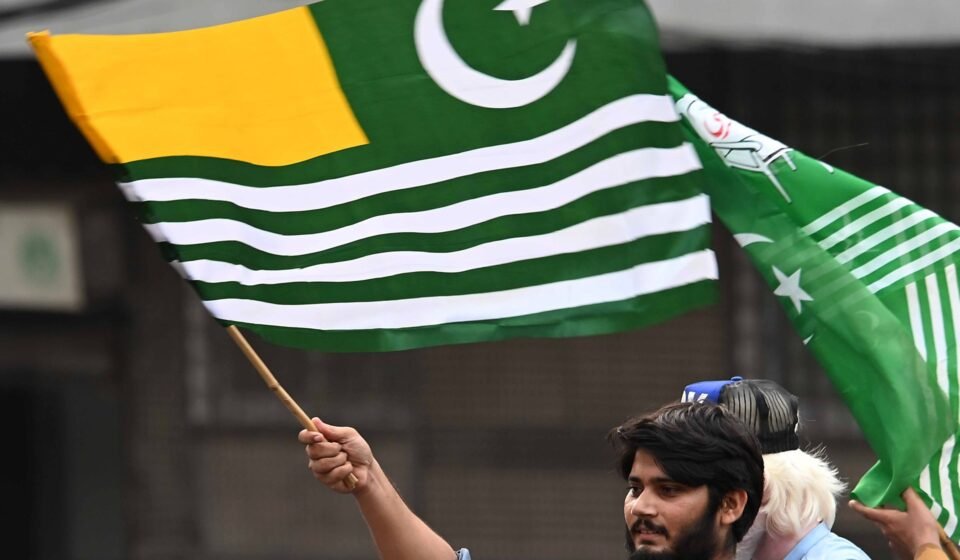
Islamabad, Pakistan – The recent surge of violence in Pakistan-administered Kashmir has brought attention to a long-standing issue that is now at the center of this summer’s election: 12 disputed seats reserved for refugees from Indian-administered Kashmir who currently live in different parts of Pakistan.
The dispute began when the Jammu Kashmir Joint Awami Action Committee (JAAC), which represents the movement behind the protests, was banned by local authorities on June 5. Its leadership has since been arrested or gone underground, with its demands expanding to include abolition of 12 assembly seats reserved for Kashmiri refugees.
These seats are part of a larger dispute over who gets to decide how the region is governed. The government says they cannot be touched without a constitutional amendment, while JAAC argues that it was introduced in 1960 and reaffirmed by AJK’s Interim Constitution and reaffirmed by its 13th Amendment in 2018.
Pakistan-administered Kashmir has grown from 3.2 million voters in 2021 to over 3.8 million this year, according to Election Commission figures. Within that, the 12 refugee constituencies account for roughly 439,000 registered voters, scattered across cities including Lahore and Sialkot rather than concentrated in a single geographical area like AJK’s territorial constituencies.
The dispute is not new; it predates Pakistan-administered Kashmir itself. Under a United Nations Commission on India and Pakistan resolution adopted in January 1949, Kashmir’s final status was to be determined through the democratic method of a free and impartial plebiscite. Nearly 80 years later, that has yet to happen.
Pakistan’s Defence Minister Khawaja Asif told the National Assembly on June 11 that the future of the refugee seats should be decided by voters, not under pressure from street protests. He urged JAAC to contest the issue in the election rather than demanding its resolution beforehand.
However, Hassan Kamal Wattoo, a Lahore-based constitutional lawyer, argues that giving greater autonomy to AJK “strengthens Pakistan’s case on the international stage.” Anam Zakaria, a historian and author of Between the Great Divide: A Journey into Pakistan-administered Kashmir, points out that there is a deeper contradiction within AJK’s constitutional framework.
On one hand lies India’s ongoing systemic violence and human rights abuses in Indian-administered Kashmir. Candidates seeking public office in Pakistan-administered Kashmir must first swear allegiance to AJK’s accession to Pakistan. This requirement also “in itself contradicts the right to self-determination” and sidelines Kashmiris who hold a different vision for the region’s future.
The current crisis has once again shown that local leadership lacks authority to negotiate a political settlement with its own people, according to Ershad Mahmud, a Canada-based researcher on Kashmiri displacement and politics. The dispute over refugee representation is unfolding within a framework that predates Pakistan-administered Kashmir itself.
As the election approaches, JAAC’s demands are likely to remain contentious. While some argue that giving greater autonomy to AJK would strengthen Pakistan’s case on the international stage, others point out that it contradicts the right to self-determination and sidelines Kashmiris who hold a different vision for the region’s future.
The outcome of this election will have significant implications for the future of Pakistan-administered Kashmir. Will JAAC’s demands be met, or will they remain contentious? Only time will tell.
Based on reporting from Al Jazeera.
Read original source