

Pakistan’s Kashmir votes: Why the election hinges on 12 disputed seats
The recent elections in Pakistan-administered Kashmir have sparked renewed debate about democracy, autonomy, and political power. The fight over refugee representation has revived longstanding questions about governance.
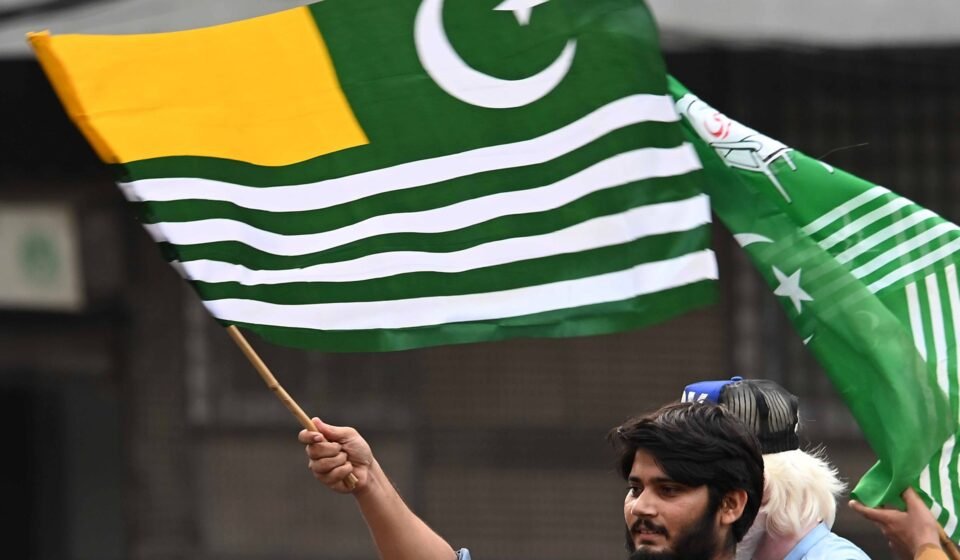
Islamabad, Pakistan – As the region prepares to vote for its 45-seat Legislative Assembly, a contentious issue remains: which assembly should represent the people of AJK? The answer lies in the disputed seats reserved for Kashmiri refugees from Indian-administered Kashmir who now live in different parts of Pakistan.
The current arrangement dates back to 1960 and was reinforced through laws in 1964 and 1970. It has been formalized in AJK’s Interim Constitution and reaffirmed by its 13th Amendment in 2018. The seats are allocated based on the collective will of the people of Jammu and Kashmir, as stated in the founding declaration of October 24, 1947.
Pakistan-administered Kashmir’s electorate has grown from 3.2 million voters in 2021 to over 3.8 million this year. Within that, the 12 refugee constituencies account for roughly 439,000 registered voters scattered across cities including Lahore and Rawalpindi.
The Jammu Kashmir Joint Action Committee (JAAC), which is behind the protests, has demanded the abolition of 12 assembly seats reserved for Kashmiri refugees. The group’s original charter was focused on subsidized flour, electricity at cost price, and a share in benefits from hydropower projects. However, JAAC now seeks to abolish these seats outright.
The government says they cannot be touched without a constitutional amendment. In June, the AJK Supreme Court addressed the issue directly, stating that the seats are protected under AJK’s constitution and can only be abolished through a formal constitutional amendment.
Pakistan-administered Kashmir’s Prime Minister Faisal Mumtaz Rathore has urged JAAC to contest the issue in the election rather than demanding its resolution beforehand. The government also rejected JAAC’s proposals for alternative solutions, such as retaining symbolic refugee representation or replacing the 12 assembly seats with four seats in the AJK Council.
The dispute over the refugee seats is not new. It predates Pakistan-administered Kashmir itself and has been a longstanding issue between India and Pakistan. However, the current crisis highlights the deep-seated tensions between Islamabad’s bureaucracy, military, and intelligence establishment and the local leadership of AJK.
Ershad Mahmud, a Canada-based researcher on Kashmiri displacement and politics, argues that “Islamabad’s bureaucracy, military, and intelligence establishment have reduced AJK’s elected leadership to a largely symbolic role.” He also notes that the current crisis has once again shown that the local leadership lacks authority to negotiate a political settlement with its own people.
The refugee seats endure partly because they continue to serve Islamabad’s interests. Pakistan-administered Kashmir treats these seats as an instrument of its Kashmir policy and political influence, allowing Pakistani-based parties to shape government formation in Muzaffarabad.
Hassan Kamal Wattoo, a Lahore-based constitutional lawyer, argues that giving greater autonomy to AJK strengthens Pakistan’s case on the international stage. However, Anam Zakaria, a historian and author of Between the Great Divide: A Journey into Pakistan-administered Kashmir, suggests that there is a deeper contradiction within AJK’s constitutional framework.
On one hand lies India’s “longstanding and ongoing systemic violence and human rights abuses in [Indian-administered] Kashmir”, she argues. However, on the other hand, candidates seeking public office in Pakistan-administered Kashmir must first swear allegiance to AJK’s accession to Pakistan, which contradicts the right to self-determination.
The recent elections have sparked renewed debate about democracy, autonomy, and political power in Pakistan-administered Kashmir. As the region prepares to vote for its 45-seat Legislative Assembly, it remains to be seen how these issues will be resolved.
Based on reporting from Al Jazeera.
Read original source