
Skip to content
-
Subscribe to our newsletter & never miss our best posts. Subscribe Now!
  • https://www.facebook.com/
  • https://twitter.com/
  • https://t.me/
  • https://www.instagram.com/
  • https://youtube.com/
MAJESTA TIMES MAJESTA TIMES MAJESTA TIMES

We bring you the truth

MAJESTA TIMES MAJESTA TIMES MAJESTA TIMES

We bring you the truth

  • Home
  • About
  • Contact Us

About Us

  • About Organization
  • Our Clients
  • Our Partners

Useful Information

Vim in meis verterem menandri, ea iuvaret delectus verterem qui, nec ad ferri corpora.

Euismod nisi porta lorem mollis. Interdum velit euismod in pellentesque.

  • Home
  • About
  • Contact Us
Subscribe
Close

Search

LocalNature

The Monsoon Paradox: Blessing, Floods, and Missed Opportunities

By Saad Ismail
July 29, 2026 4 Min Read
0

South Asia is a blessed land with all four seasons. From the sunny, hot days of summer to the blissfully cold nights of winter, it is visible that nature has blessed this land with so much. But there is an additional blessing in the form of the Monsoon. This is basically a seasonal period of rain that makes this region green and lush. This is one of the reasons South Asia is blessed with so much agricultural land.

When something has a good side, it also has a downside. Although the Monsoon is one of the blessings for the region, it also affects the land with devastating effects. Every year, floods rewrite the tale of devastation and sorrow. But in the modern world, how is this region still suffering from these issues? Let’s have a look at one of the biggest examples of man-made mismanagement, which has impacted millions of people in terms of wealth and lives.

Why is Monsoon an issue?
Why are countries like India and Pakistan wasting so much water?
Can this issue ever be solved?

Why is Monsoon an Issue?

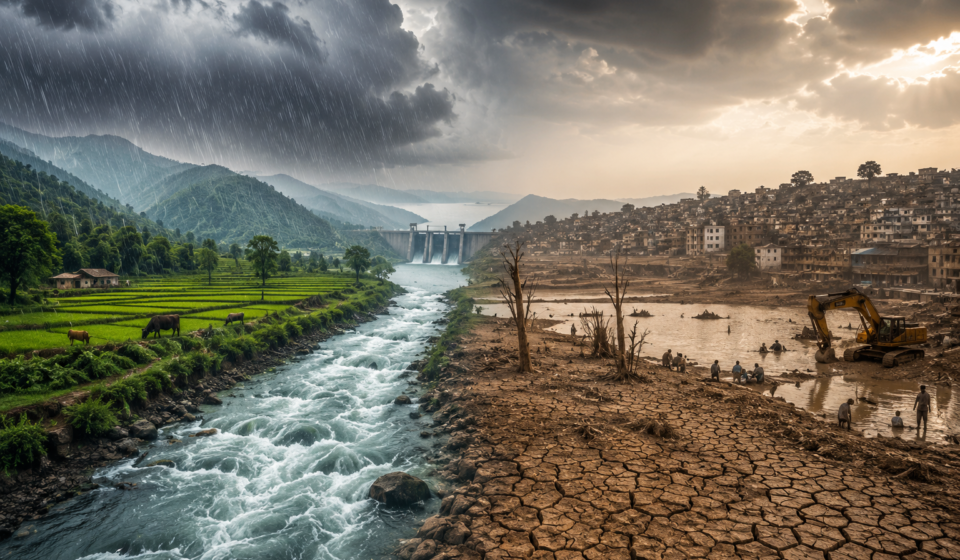
Monsoon was a blessing for this land, bringing water for agricultural lands and daily use. Over the years, rainfall has increased, and so has the water level. This has resulted in the devastating side of the Monsoon, killing cattle and destroying farmlands. Every year, in India and Pakistan, lands near rivers are affected by floods. Governments have always stated that development in the river basin is the reason for these deaths. But during this season, many areas away from rivers are also affected. What is the reason for this?

Pakistan and India faced the problem of a lack of electricity and water for agricultural use. Over the years, these issues deepened. Somewhere, India overcame the issue, but Pakistan is still going through it. The issue was the lack of development of new dams for electricity generation and water storage. During the year, rivers in Pakistan feel like empty grounds, but during the Monsoon, the condition reaches a flood situation. This was not a sudden change. Before this whole cycle, everything was calculated. But it has not been resolved until now.

Why are India and Pakistan Wasting So Much Water?

Over the years, most of the Monsoon water has gone straight into the Indian Ocean, where, in the next few months, people are going to suffer from a lack of water for household and agricultural use. This water can be used in dams to generate energy and resolve the issue of electricity. But uncertainty and a lack of planning are causing potential wastage.

In the case of India, the situation is much better, where they are purposely using the excessive water as a weapon to submerge Pakistani lands. During the Monsoon season, an excessive amount of water enters Pakistan without any proper communication. But when the Monsoon season is over, they purposely stop water, breaching the Indus Waters Treaty.

Pakistan was years behind in building what it should have built decades ago. It suffers from floods during the Monsoon season and dryness after the Monsoon. The failure of governments over the years has been evident. If they had created the capacity to store water, they could avoid both kinds of issues.

Can the Issue Ever Be Resolved?

Living in old stories and covering mistakes is old now. What we have to do now is rethink how this issue can be resolved. It feels simple at first—just build dams and the issue is gone. No, it is not that simple. We cannot just build dams and think we are saved. We need proper communication between both sides to decide how to create dams in such locations that do not affect water flow and agricultural production.

Secondly, there should be the creation of a mechanism that informs both sides about water flow. Certainly, this is more important for India, as most rivers flow from India and enter Pakistan at some point. Even in this case, China also has to be involved, as a few rivers enter India from China. So all three should sit at the table to create a proper framework.

These are a few speculations about the hazards and possible solutions that can help us tackle these issues. But this is just a personal opinion. For sure, governments have tried or are trying these things. Somehow, they have fallen short. That is why one thing is clear: the Monsoon is here again and has already affected Assam and Lahore. Sooner or later, it will hit the southern region of Punjab, which is one of the main agricultural hubs of Pakistan. The death toll and devastation will rise.


Tags:

Climate ChangeClimateChangeDisasterManagementDroughtEnvironmental JournalismFloodsIndiaIndusMonsoonPakistanSouth AsiaSouth Asian MonsoonWater ConservationWater CrisisWater ManagementWater SecurityWaterManagementWaterSecurity
Author

Saad Ismail

Muhammad Saad Ismail is a multimedia journalist and columnist with international experience across sports, politics, and digital media. His work spans multiple regions, including Europe, North America, and Africa, reflecting a strong global perspective in contemporary journalism. He began establishing his profile as a sports writer with World in Sports, where he produced match reports and tactical analyses covering football and cricket. Expanding into international media, he contributed as a sports journalist at MancSports, focusing on club-level football analysis, and later worked with Meer as an entertainment journalist, blending sports coverage with cultural and entertainment narratives. Alongside his reporting roles, Saad has held editorial responsibilities as Web Content Manager at The Hub Web, where he managed and published content across sports and entertainment while driving audience engagement through opinion-led journalism. Currently, he serves as a Political Journalist at The FLUC, producing research-driven commentary on global politics and public policy. In parallel, he works as an NBA correspondent for Verticality Sports, delivering analytical coverage, feature stories, and performance breakdowns centered on league trends and key storylines. With a foundation in Mass Communication and professional training from institutions such as Al Jazeera, Reuters, and the Press Council of Pakistan, Saad combines traditional reporting skills with modern multimedia expertise. His work is defined by analytical depth, cross-platform storytelling, and a commitment to informed, impactful journalism.

Follow Me
Other Articles
Israeli soldier runs marathon around Gaza outpost
Previous

Israeli soldier runs marathon around Gaza outpost

Next

From AFCON Chaos to Women’s Football: A New Chapter Begins in Morocco

No Comment! Be the first one.

Leave a Reply Cancel reply

Your email address will not be published. Required fields are marked *

Live Search

Blocksy: Search Block

Posts

Categories

  • Art & Design
  • Cricket
  • Economy
  • Football
  • International
  • International Politics
  • Local
  • Local politics
  • Nature
  • Poltics
  • Sports
  • Technology
  • Trends
  • Uncategorized
  • War

Discere veritus detraxit pri ut, sea ei dicunt theophrastus. Eum harum animal debitis cu

Melissa Peterson

Popular Posts

You May Have Missed

Iran: Currently no negotiations with the US
International

Iran: Currently no negotiations with the US

admin
By admin
July 29, 2026
Students and staff work to bring Islamic University of Gaza back to life
International

Students and staff work to bring Islamic University of Gaza back to life

admin
By admin
July 29, 2026
Israel’s approval of limited Gaza force a calculated manoeuvre, experts say
International

Israel’s approval of limited Gaza force a calculated manoeuvre, experts say

admin
By admin
July 29, 2026
Why has the US halted its bombing of Iran?
International

Why has the US halted its bombing of Iran?

admin
By admin
July 29, 2026
International

U.S. Pauses Iran Strikes Amid Growing Risks, and Measles Cases Hit a New Record

admin
By admin
July 29, 2026
Pakistan foils 400 cyberattacks, seeks AI legislation - samaa tv
International

Pakistan foils 400 cyberattacks, seeks AI legislation – samaa tv

admin
By admin
July 29, 2026
Iran confirms indirect talks with US through Pakistan, Qatar, Oman - samaa tv
International

Iran confirms indirect talks with US through Pakistan, Qatar, Oman – samaa tv

admin
By admin
July 29, 2026
Iran warns Ukraine of retaliation after deadly Caspian Sea strike
International

Iran warns Ukraine of retaliation after deadly Caspian Sea strike

admin
By admin
July 29, 2026
Pakistan condemns Indian minister's remarks on Kashmir - samaa tv
International

Pakistan condemns Indian minister’s remarks on Kashmir – samaa tv

admin
By admin
July 29, 2026

CONTACT US
PHONE:
+1 581-781-5217
+1 709-702-3608
EMAIL:
exeditor@themajestatimes.com
editor@themajestatimes.com

Copyright 2026 — MAJESTA TIMES. All rights reserved. Blogsy WordPress Theme