

India’s Youth Unleash Satire on Modi
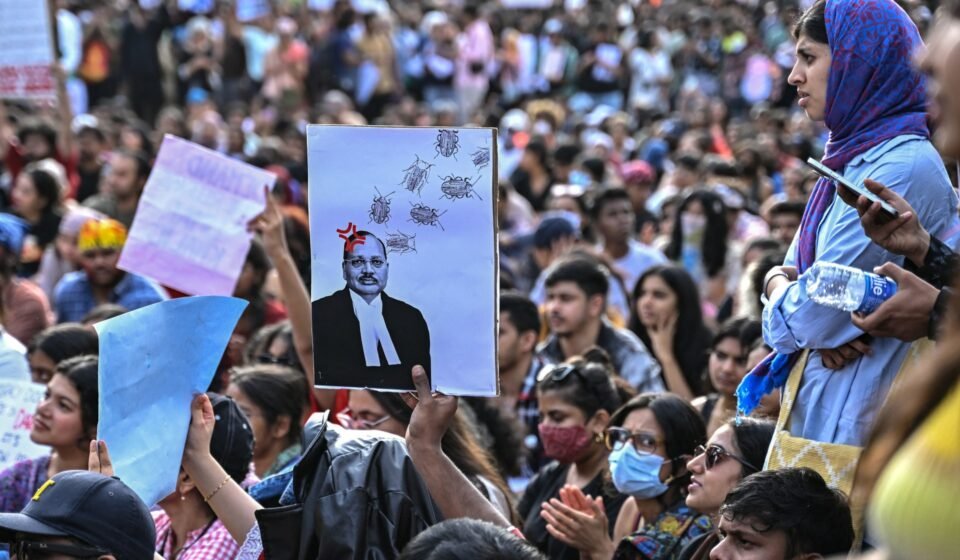
In a bold display of defiance, India’s youth have taken to the streets at Jantar Mantar, a site in central Delhi where thousands gathered for weeks to protest against Prime Minister Narendra Modi. The movement, which began as an act of satire and ridicule aimed at Modi himself, has evolved into a powerful critique of his regime.
The protests were sparked by a series of incidents that highlighted the government’s disregard for democratic norms and its attempts to silence dissenting voices. One such incident was when Chief Justice of India Dhirubhai Patel compared unemployed young people to “cockroaches,” sparking widespread outrage among the youth.
The movement gained momentum with the formation of the “Cockroach Janta Party” (CJP), a satirical organization that used digital art and social media platforms to mock Modi’s regime. The protests also drew attention to issues such as irregularities in the National Eligibility cum Entrance Test (NEET) examinations, which were seen as a symbol of the government’s corruption.
The youth’s actions have been met with resistance from the state, which has deployed its police force to suppress the protests and arrest protesters. However, the young have refused to back down, using their phones and social media platforms to launch an unrelenting assault on Modi’s public image.
Their message is clear: they will not be silenced or intimidated by the government’s attempts to control them. The movement has been described as a “systematic demolition” of the mythic public persona that Modi has built over the years, revealing instead a regime marked by arrogance and disregard for democratic norms.
The protests have also highlighted the role of social media in shaping public opinion and mobilizing citizens. The young used platforms such as Twitter and Facebook to create memes and hashtags that ridiculed Modi’s regime, making it difficult for him to respond effectively.
As one protester put it: “We are not your friends.” This simple yet powerful slogan marked a turning point in the movement, as it rejected the idea of state coercion and instead demanded accountability from Modi himself.
The government’s response has been widely criticized, with many accusing them of using force to silence dissent. However, for the young, this is just another example of their refusal to be intimidated or silenced.
In the end, the protests have left a lasting impact on Indian politics, highlighting the importance of democratic values and the need for citizens to reclaim their voice in public discourse. As one protester noted: “Democracy begins the moment a people recover confidence in their own voice.”
Source: Al Jazeera
Based on reporting from Al Jazeera.
Read original source