

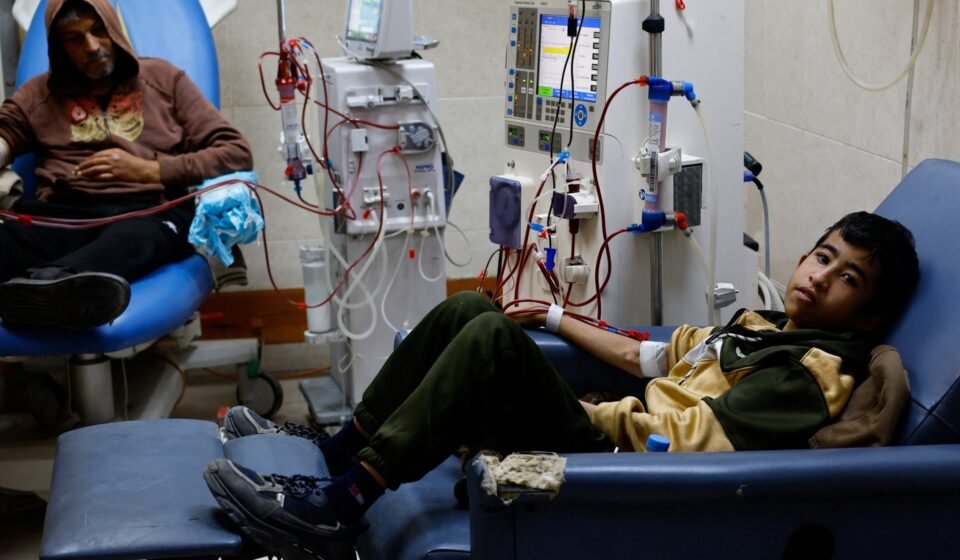

Gaza City’s Al-Shifa Hospital faces unprecedented challenges as medical staff struggle to keep up with the influx of patients in need of dialysis and other life-saving treatments. The hospital, which has been a lifeline for thousands of people in Gaza, is currently operating at full capacity but remains woefully unprepared due to severe shortages of essential medications.
According to reports from the Palestinian Ministry of Health, 50% of dialysis machines in Gaza have stopped working completely due to an ongoing shortage of sodium bicarbonate. This has resulted in a significant reduction in the number of patients who can receive treatment for kidney failure and other life-threatening conditions. The situation is further exacerbated by the fact that only four hospitals in Gaza are equipped to handle these types of cases, leaving many patients without access to necessary care.
The consequences of this shortage have been dire. Ministry of Health statistics show that there were 1,200 kidney failure patients before the war but now stand at around 700 due to missed dialysis sessions and a lack of essential medications. This has resulted in a significant increase in mortality rates among these patients, with over 470 deaths attributed to delayed treatment.
The situation is particularly dire for children like Ruwaa Muntasir Abdul Karim, who was recently diagnosed with kidney failure at the age of 14. Her father, Muntasir, reports that his daughter’s condition has deteriorated significantly since her illness began, and she now requires regular dialysis sessions to stay alive.
The hospital department keeping Ruwaa alive is struggling under the constant pressure to support thousands of people in Gaza without sufficient resources. Israel’s war on Gaza has decimated the Palestinian medical sector through repeated attacks on hospitals, including al-Shifa, as well as harsh limitations on what can enter Gaza.
According to reports from the World Health Organization (WHO), over 43,000 people in Gaza have been left with injuries described by the WHO as “life-changing,” including thousands of severe limb injuries that resulted in amputations and permanent disabilities. Even after being treated for these initial injuries, Palestinians in Gaza face a new challenge: rehabilitation and access to basic mobility aids.
Physiotherapist Aya al-Shaltouni from Khan Younis notes that the lack of prosthetics, wheelchairs, and crutches has become part of patients’ daily reality, with demand far exceeding supply. This shortage does not only affect physical suffering but also completely changes the patient’s life path, ultimately determining whether they are able to recover to some form of independent life.
The situation is further complicated by Israel’s refusal to allow medical staff from Gaza to travel abroad for treatment, a decision that has been pending since Ruwaa’s trip was approved six months ago. The lack of access to necessary care and resources means that the transplant cannot take place in Gaza, leaving Ruwaa without hope.
The shortage of essential medications is also exacerbating the situation, with reports suggesting that many patients are waiting for long periods before receiving treatment. This has resulted in a significant increase in mortality rates among these patients, highlighting the urgent need for increased support and resources to address this crisis.
Source: Al Jazeera
Based on reporting from Al Jazeera.