

Israel’s Expansion in Gaza: A Growing Concern for Humanitarian Crisis
As tensions between Israel and Hamas continue to escalate in the Gaza Strip, concerns are growing about the impact on civilians. The recent construction of a network of barriers along the Yellow Line, previously agreed upon by Israel and Hamas as part of the October ceasefire deal, has raised alarm bells among human rights organizations.
The barriers, which stretch over 42 kilometers (26 miles) and cover approximately 85% of the Yellow Line, are being constructed in areas where Palestinians have been living during the ceasefire. Experts warn that this expansion is a clear indication of Israel’s intention to maintain control over Gaza, despite the agreement to withdraw its forces.
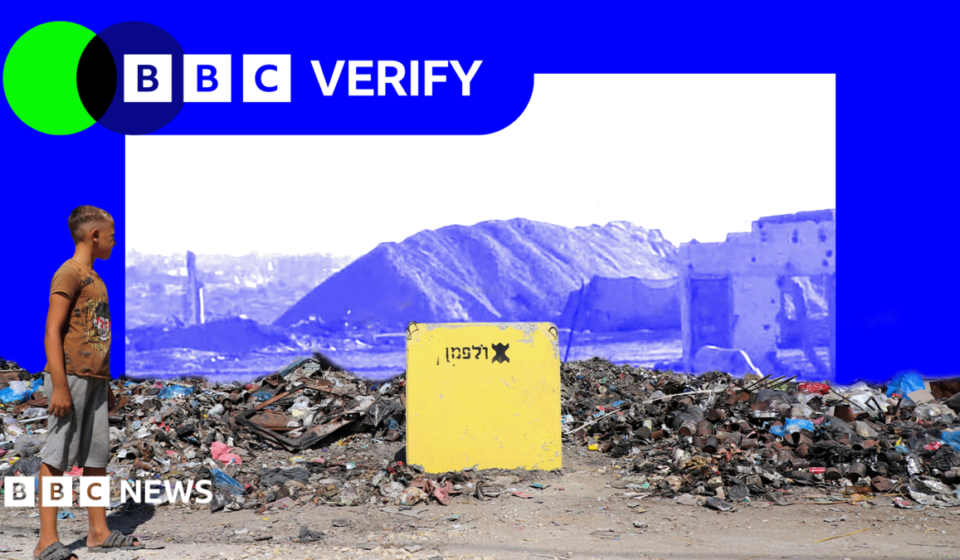
The construction of these barriers has led to widespread displacement among Palestinian families. In al-Tuffah, northern Gaza, residents woke up on Monday morning to find yellow concrete blocks marking out where Israel controls in the area had been moved westwards into Salah al-Din road, a key north-south route through Gaza. The blockades have effectively pushed families further away from their homes.
The Israeli military has responded by flying an Israeli flag and erecting earth barriers around 3m (10ft) tall near the center of Salah al-Din road. This move is seen as a clear attempt to restrict Palestinian movement and create a no-go zone in Gaza. The IDF claims that its “defensive posture” includes deploying security personnel, intelligence capabilities, technological means, and operational activity by troops.
However, this expansion has been met with resistance from local residents who have reported seeing Israeli bulldozers and heavy machinery building new bases and earth banks near their homes. Satellite imagery shows scores of temporary shelters disappearing in July, leaving families without basic supplies.
The humanitarian situation in Gaza is dire. According to the UN’s humanitarian office, OCHA, some 30 families lost their tents in Zeitoun and had to be helped with basic supplies. The displacement has also led to reports of daily movements of Israeli tanks, recurrent gunfire, and the construction of tall sand embankments.
The US-brokered ceasefire deal between Israel and Hamas last October aimed to establish a demarcation line behind the Yellow Line, which would leave Israel in temporary control over 53% of Gaza’s territory. However, recent developments suggest that this agreement has been breached, with Israel moving its forces further into Gaza than agreed upon.
The Israeli military has rejected claims from Hamas that it is violating the ceasefire deal by moving the Yellow Line westwards. Instead, they argue that their “defensive posture” includes deploying security personnel and operational activity to protect both troops and surrounding communities.
As tensions continue to escalate in Gaza, concerns about human rights and humanitarian crisis grow. The international community must take action to address these pressing issues and ensure that civilians are protected from the devastating consequences of Israel’s actions.
Source: BBC Top Stories
Based on reporting from BBC Top Stories.