

Pakistan’s military operations against Afghanistan are a complex issue with multiple dimensions and motivations.
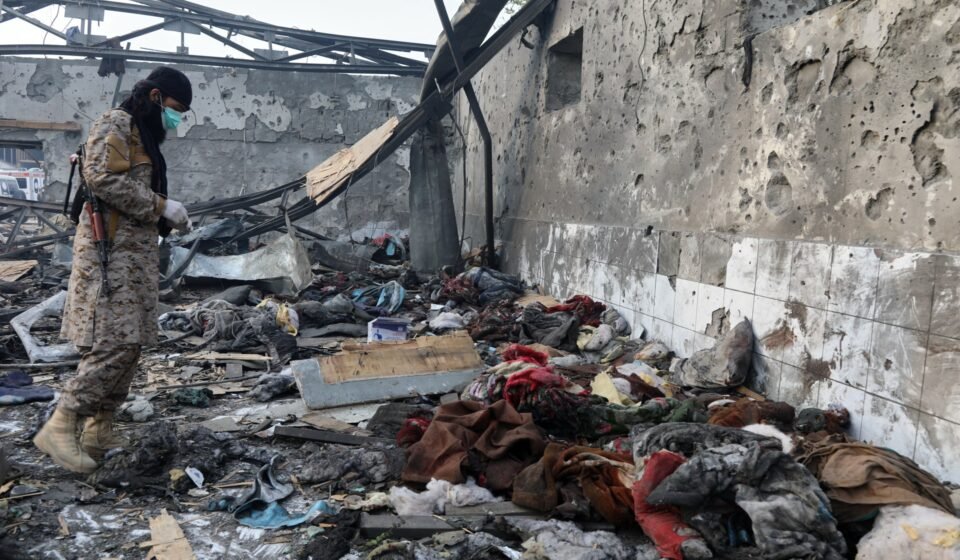
Since October 2025, Pakistan has carried out numerous air strikes in Afghanistan, resulting in significant civilian casualties and destruction. The deadliest incident occurred on March 16, 2026, when the Kabul-based drug rehabilitation centre was hit, killing 269 civilians and injuring 122 according to United Nations figures. This attack is widely condemned by human rights organizations.
In a report released on July 21, Amnesty International called for Pakistani authorities to explain the strike and urge that it be investigated as possible war crimes. Pakistan claims its operations target the Tehreek-e-Taliban Pakistan (TTP), which it accuses of supporting the Afghan Taliban. However, the TTP denies any support from Afghanistan.
The roots of the TTP lie within Pakistan itself. In November 1994, Sufi Mohammad led an armed uprising in Swat and Malakand to impose Sharia law, marking the first such campaign by a cleric in the country. Thirteen years later, Baitullah Mehsud united several militant factions under the TTP banner. Sufi Mohammad’s son-in-law, Mullah Fazlullah, led the group from 2013 until his death in a US drone strike in 2018.
The Pakistani military has launched nearly a dozen major operations against the TTP over the past two decades. However, the group survived not only due to its resilience and ideological appeal but also because of Pakistan’s distinction between “good” and “bad” militants. Islamabad covertly supported militant groups in Afghanistan, intended to weaken and ultimately bring down the former Afghan republic.
Pakistan has long been accused of using militant groups to pursue geostrategic objectives in Afghanistan and against India. Following Afghanistan’s 1978 communist coup and Soviet invasion the next year, Pakistan became a key Western ally, particularly for the United States, in containing Soviet influence. Pakistan was already hosting Afghan opposition figures, including Gulbuddin Hekmatyar and Ahmad Shah Massoud.
With US backing, Pakistan established training centres along the Durand Line, where local communities were exposed to systematic radicalization. Thousands of madrassas were also established, literature glorifying jihad distributed, and local fighters encouraged to join the Afghan mujahideen. Many were later mobilized alongside the Afghan Taliban against the United States and former Afghan government.
Following September 11 attacks, Pakistan’s military under General Pervez Musharraf publicly yielded to US pressure and joined the “war on terror”. However, continuing to support selected militant groups it considered useful, Pakistan maintained its covert support for the TTP. The discovery of Osama bin Laden near Islamabad remains a damning symbol of this double game.
Many analysts question whether Pakistan genuinely intends to eliminate the TTP or other militant networks. They argue that Islamabad still regards some groups as strategic assets and seeks not to eradicate militancy but to keep it below a manageable threshold as a controlled insurgency. If the TTP alone does not explain Pakistan’s attacks on Afghanistan, what broader objective is Islamabad pursuing?
Pakistan has long pursued “strategic depth” in Afghanistan, traditionally meaning cultivating a friendly government that could provide political and military space for conflict with India. However, this policy appears to have evolved into strategic dominance: treating Afghanistan as an extension of Pakistan’s security perimeter.
In recent social media posts by Pakistan’s former special representative for Afghanistan, Asif Durrani, Islamabad assumes that even normal diplomatic relations between Afghanistan and India constitute a threat. He offered no evidence that India is using Afghan territory against Pakistan. His comments reflect Islamabad’s assumption that even normal diplomatic relations with Afghanistan view India through its security lens.
The Central Asian dimension also plays a significant role in Pakistan’s operations against Afghanistan. Former Pakistani senator and political analyst Afrasiab Khattak argues that Islamabad seeks to contain Russian and Chinese influence by supporting the Taliban, which he attributes partly to the Taliban authorities’ unwillingness to facilitate destabilization into Central Asia.
In conclusion, Pakistan’s military operations against Afghanistan are a complex issue with multiple dimensions and motivations. While the TTP is undoubtedly one factor, it appears that Islamabad has broader objectives in pursuing these operations.
Based on reporting from Al Jazeera.