

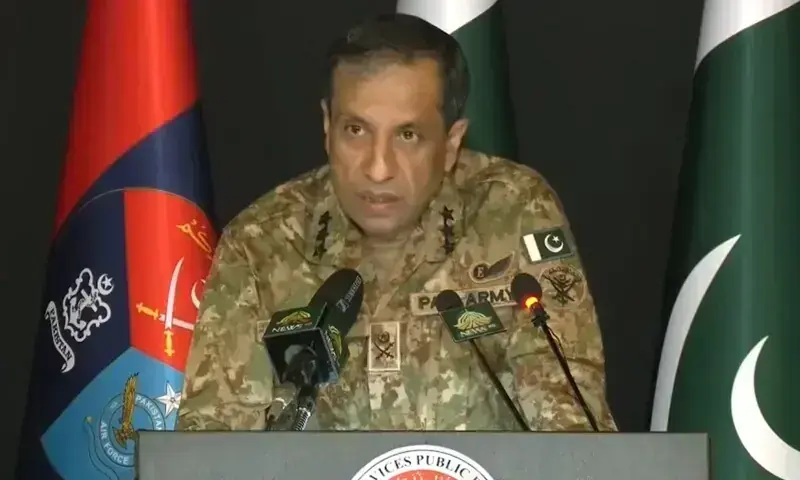

Balochistan Situation Shows No Signs of Improvement, DG ISPR Warns
The situation in Balochistan continues to deteriorate, according to Director General (DG) Lieutenant General Ahmed Sharif Chaudhry of Inter-Services Public Relations (ISPR). In a press conference held on Friday, the DG ISPR addressed concerns about the overall security situation in Pakistan and specifically highlighted the challenges faced by the province.
The military’s spokesperson stated that 40,348 intelligence-based operations had been conducted this year so far, with most taking place in Balochistan. This figure includes operations carried out by all security forces, including police, civil armed forces, intelligence agencies, and the armed forces. The DG ISPR noted that these operations have resulted in a significant number of terrorism incidents, with 3,145 reported cases across the country.
The breakdown of terrorist incidents in Balochistan is as follows: 1,971 were reported from Khyber Pakhtunkhwa, 1,148 from Balochistan, and 26 from other parts of Pakistan. The DG ISPR also confirmed that an average of 10 terrorists are killed every day, with the highest ratio ever recorded in this year’s operations.
In addition to terrorism incidents, security forces have been undertaking nearly 200 intelligence-based operations (IBO) per day. These IBOs take place every hour and aim to disrupt terrorist networks. The DG ISPR stated that “819 Pakistanis have been martyred” in incidents of terrorism in the ongoing year, comprising 303 army personnel, 194 law enforcers from police and civil armed forces, and 322 civilians.
The situation has also seen an increase in suicide bombings, with a total of 28 incidents reported this year. The majority of these attacks have been carried out by Afghan nationals and individuals associated with their security forces. Comparing the number of terrorists killed last year to those killed in this year’s operations reveals that 2,597 were killed in 2025 and 2,084 this year so far.
The DG ISPR attributed the increase in terrorism incidents to a shift in strategy by terrorist groups, which have begun focusing more on Balochistan. He also pointed out that the “agenda of the terrorist-supporting Taliban regime” is driving these efforts. Additionally, he noted that the proactive nature of operations has contributed to an uptick in terrorist activities.
The DG ISPR emphasized that terrorism incidents are not limited to Balochistan and have a broader impact on Pakistan’s overall security environment. He stated that “the way the kinetic prong of the counter-terrorism is maturing, responding and delivering” will be crucial before 2026 comes to an end.
In response to concerns about the situation in Balochistan, the DG ISPR outlined three key questions: what issue is being addressed, what actions are being taken, and what progress has been made. He emphasized that addressing these questions would provide clarity on the situation’s trajectory.
The DG ISPR concluded by stating that a hard state, characterized by equality, lawfulness, and stability, is essential for achieving security and reducing grievances. However, he also acknowledged that this concept may not be universally applicable, as individuals have different rights and obligations.
Source: Dawn
Based on reporting from Dawn.