

Turkey’s Davutoglu: A Turbulent Career in Foreign Policy
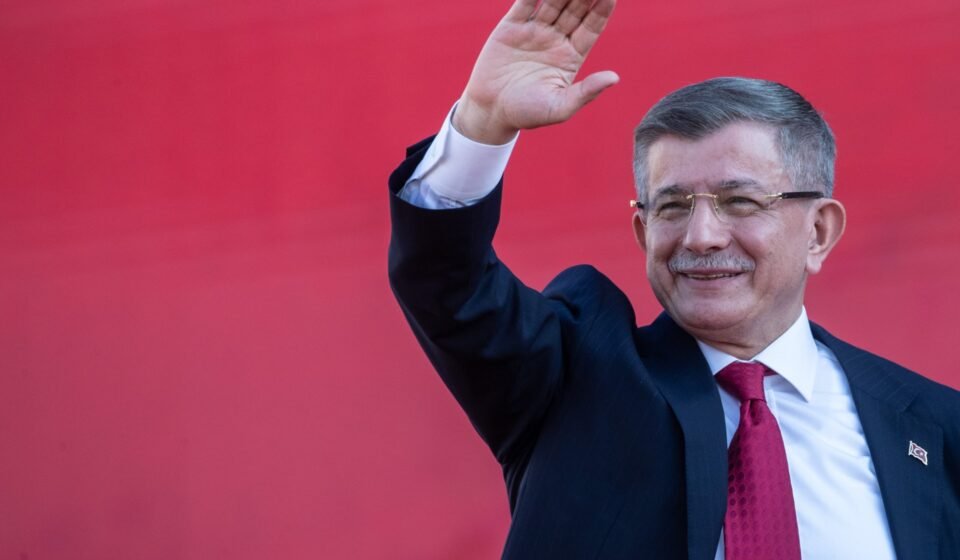
Ahmet Davutoglu was once a dominant force behind Turkey’s foreign policy, serving as the country’s top diplomat and playing key roles in shaping its relationships with neighboring countries. However, his tenure has been marred by controversy and criticism from within and outside of government.
Davutoglu joined Turkey’s academic community at Bogazici University, where he earned degrees in economics and political science. He later taught abroad before returning to Turkey, becoming a professor and eventually an advisor on foreign policy under the leadership of President Recep Tayyip Erdogan.
In 2002, Davutoglu became one of the key architects of the AK Party’s rise to power, serving as its chief foreign policy adviser after Erdogan took office. He was appointed foreign minister in 2009 and entered parliament in 2011. During his time in government, Turkey expanded its influence globally, opening new embassies and strengthening ties with neighboring countries.
Davutoglu’s diplomatic approach, known as “zero problems with neighbors,” aimed to establish rapport with various actors across the Middle East, Africa, and Central Asia. He sought to position Turkey as a capable communicator among these diverse groups. However, this strategy was criticized for its lack of nuance in addressing regional conflicts.
The Arab uprisings exposed the limits of Davutoglu’s vision, particularly during the Syrian Civil War. Instead of anticipating swift collapse, he supported the opposition and underestimated the severity of the conflict. This miscalculation led to prolonged instability and mass displacement.
Davutoglu has been accused of being overly emotional and romantic in his foreign policy approach, which some analysts argue strayed from a more pragmatic “realism.” His inability to establish clear boundaries between idealism, realism, and pragmatism hindered Turkey’s ability to navigate complex regional dynamics.
After Erdogan moved into the presidency in 2014, Davutoglu was chosen as AK Party leader and prime minister. However, his tenure was marked by internal power struggles and disagreements over governance and presidential authority. He stepped down in 2016 but remained in politics for another three years before establishing the Future Party in 2019.
The Future Party’s failure to attract substantial electoral support can be attributed to its inability to establish a strong base among conservative voters disillusioned with Erdogan. Davutoglu has been criticized for his handling of opposition parties, which he saw as weak and ineffective.
Despite these criticisms, Davutoglu remains an influential figure in Turkish politics. His legacy is complex, reflecting both the successes and failures of his tenure. As Turkey continues to navigate its relationships with regional powers, it will be interesting to see how Davutoglu’s ideas are reevaluated and implemented by future leaders.
Source: Al Jazeera
Based on reporting from Al Jazeera.