
Skip to content
-
Subscribe to our newsletter & never miss our best posts. Subscribe Now!
  • https://www.facebook.com/
  • https://twitter.com/
  • https://t.me/
  • https://www.instagram.com/
  • https://youtube.com/
MAJESTA TIMES MAJESTA TIMES MAJESTA TIMES

We bring you the truth

MAJESTA TIMES MAJESTA TIMES MAJESTA TIMES

We bring you the truth

  • Home
  • About
  • Contact Us

About Us

  • About Organization
  • Our Clients
  • Our Partners

Useful Information

Vim in meis verterem menandri, ea iuvaret delectus verterem qui, nec ad ferri corpora.

Euismod nisi porta lorem mollis. Interdum velit euismod in pellentesque.

  • Home
  • About
  • Contact Us
Subscribe
Close

Search

International

Known Virus, Growing Tragedy: Why Ebola Is Still Killing in DR Congo

By Saad Ismail
August 14, 2026 3 Min Read
0

The Democratic Republic of Congo made headlines following their FIFA World Cup 2026 journey. A dream of being part of the WC to reach their historical run to the Round of 32. But these days, they are making the news again, but with sorrow and tragedy. The joy we had when we heard DR Congo was gone a while ago.

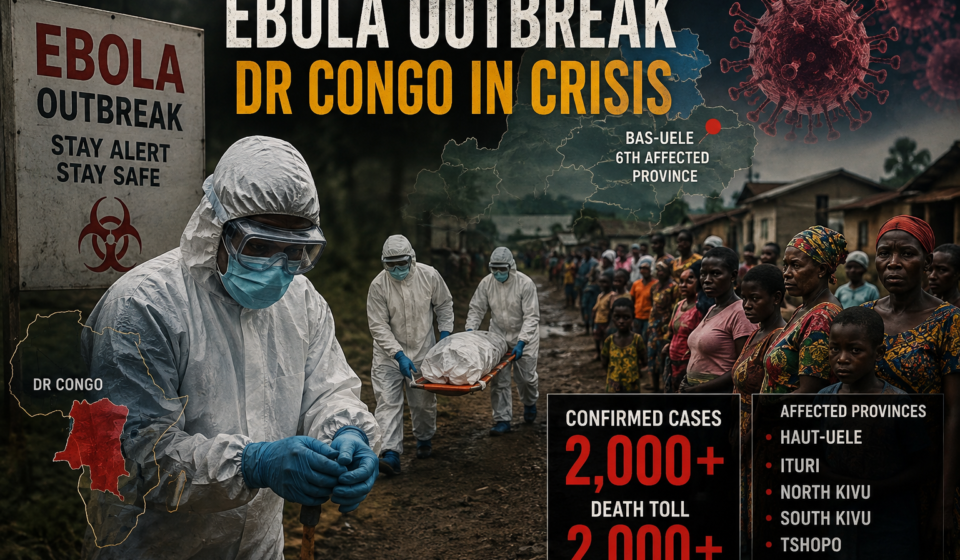
Right now, the Democratic Republic of Congo has been hit by the Ebola virus. The outbreak reached a death toll of 2,000 confirmed cases until the first case was reported. The situation is not getting any better; by the time, things are getting even worse. The question is, this is a well-known virus, but why are we failing to fight back and restrict the death toll?

How can a virus that is well known to the world still be hurting people?

Ebola virus was not a virus we encountered for the very first time. It has been known to the world for a very long time, first identified in 1976, when cases were reported in Nzara, Sudan, and Yambuku, Zaire (modern-day DR Congo). At that time, the outbreak was lethal in Congo, with 318 cases registered, where 288 people died, roughly an 88% fatality rate. This virus got its name after the Ebola River.

Over time, this virus outbreak kept going from 1976 onward to 2026. The biggest outbreak killed 2,300 people, while globally, in West Africa from 2014 to 2016, reported cases were 28,600 and 11,000 deaths. There is no doubt DRC has decades of Ebola experience, but the problem is weak surveillance, insecurity, population displacement, and inadequate healthcare infrastructure. Somewhere, the detection of this is also difficult, where it was misunderstood as other common diseases like fever.

Why Has Death Toll Risen Despite the Presence of Antibiotics?

In scientific studies, things are clear: this time, we are encountering a different variant of Ebola. Medically, it has been reported that over time, viruses adapt and change. This resulted in starting from ground zero; that is one of the reasons why, over the years, this has affected the African community so hard. It was already reported that this is a different variant of Ebola than the one we know. This is caused by the Bundibugyo virus, not the Zaire Ebola virus responsible for most outbreaks. There is no licensed vaccine or specific treatment for Bundibugyo virus. This means doctors cannot rely on the same established countermeasures available for Zaire Ebola.

If we look at the DRC scenario, there are a few factors that are restricting the process, including the continuous insurgency. Clashes persist involving M23, backed by some regional actors, and ISIS-linked ADF militias committing widespread abuses. The war for resources has fueled the conflict for decades.

How Can the Issue Be Resolved?

The solution for the time being is restricting the displacement of people. Somehow, restrictions like those during COVID-19 could be helpful, as the DRC has already confirmed that the outbreak has reached Bas-Uele, the sixth affected province. If displacement is not restricted, public gatherings should be minimized.

One of the biggest concerns is mistrust and misinformation. Here, the Government of the DRC has to flag out the flow of misinformation to the people. Through trusted and government officials, all the information should be shared with the public. For this outbreak, this could work, but in the longer run, they should have to strengthen the healthcare sector.

It is not just a story of a virus exploiting weaknesses in a health system already strained by conflict and humanitarian crisis.


Tags:

ADFAfricaBundibugyo VirusDemocratic Republic of CongoDisease OutbreakDR CongoEbolaEbola OutbreakGlobal HealthHealthcare CrisisHumanitarian CrisisInfectious DiseasesM23Public Health
Author

Saad Ismail

Muhammad Saad Ismail is a multimedia journalist and columnist with international experience across sports, politics, and digital media. His work spans multiple regions, including Europe, North America, and Africa, reflecting a strong global perspective in contemporary journalism. He began establishing his profile as a sports writer with World in Sports, where he produced match reports and tactical analyses covering football and cricket. Expanding into international media, he contributed as a sports journalist at MancSports, focusing on club-level football analysis, and later worked with Meer as an entertainment journalist, blending sports coverage with cultural and entertainment narratives. Alongside his reporting roles, Saad has held editorial responsibilities as Web Content Manager at The Hub Web, where he managed and published content across sports and entertainment while driving audience engagement through opinion-led journalism. Currently, he serves as a Political Journalist at The FLUC, producing research-driven commentary on global politics and public policy. In parallel, he works as an NBA correspondent for Verticality Sports, delivering analytical coverage, feature stories, and performance breakdowns centered on league trends and key storylines. With a foundation in Mass Communication and professional training from institutions such as Al Jazeera, Reuters, and the Press Council of Pakistan, Saad combines traditional reporting skills with modern multimedia expertise. His work is defined by analytical depth, cross-platform storytelling, and a commitment to informed, impactful journalism.

Follow Me
Other Articles
Analyst: the US faces a strategic ‘dead end’ in Iran
Previous

Analyst: The US Faces A Strategic ‘Dead End’ In Iran

Next

Pakistan’s Political Rollercoaster: What Really Happened to Imran Khan?

No Comment! Be the first one.

Leave a Reply Cancel reply

Your email address will not be published. Required fields are marked *

Categories

  • Art & Design
  • Business
  • Climate
  • Cricket
  • Economy
  • Football
  • International
  • International Politics
  • Local
  • Local politics
  • Nature
  • Poltics
  • Sports
  • Technology
  • Trends
  • Uncategorized
  • War

You May Have Missed

Football Sports

Pakistan Football’s U15 Trials Raise Serious Questions: Is the System Failing Young Talent?

Saad Ismail
By Saad Ismail
September 9, 2026
International Politics Poltics

Venezuela’s Oil Deal: Is the USA Moving Toward Global Oil Dominance?

Saad Ismail
By Saad Ismail
August 31, 2026
International Politics Poltics

“Modi, Rahul… Vijay? Thalapathy’s Rise to India’s PM Race”

Saad Ismail
By Saad Ismail
August 28, 2026
Local politics Poltics

Pakistan’s Political Rollercoaster: What Really Happened to Imran Khan?

Saad Ismail
By Saad Ismail
August 21, 2026
International

Known Virus, Growing Tragedy: Why Ebola Is Still Killing in DR Congo

Saad Ismail
By Saad Ismail
August 14, 2026
Analyst: the US faces a strategic ‘dead end’ in Iran
War

Analyst: The US Faces A Strategic ‘Dead End’ In Iran

admin
By admin
August 14, 2026
Fifa scraps controversial World Cup investment plan
Football

Fifa scraps controversial World Cup investment plan

admin
By admin
August 14, 2026
War

These were the best and worst places for air quality in 2…

admin
By admin
August 14, 2026
War

US report validates Pakistan military edge over India: PM

admin
By admin
August 14, 2026

CONTACT US
PHONE:
+1 581-781-5217
+1 709-702-3608
EMAIL:
exeditor@themajestatimes.com
editor@themajestatimes.com

Copyright 2026 — MAJESTA TIMES. All rights reserved.