
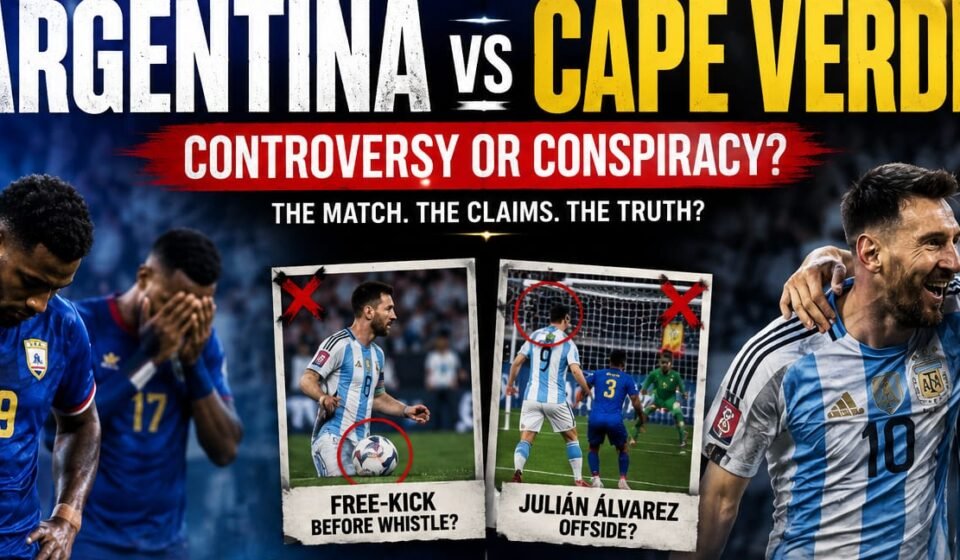

Argentina’s dramatic World Cup victory over Cape Verde has become one of the tournament’s most talked-about matches, but not solely because of the football. In the days following the game, social media was flooded with claims that Argentina benefited from controversial refereeing decisions that allegedly changed the outcome of the match.
Among the most widely shared allegations were claims that Lionel Messi took a free-kick before the referee’s whistle and that Julián Álvarez was in an offside position during Argentina’s second goal. These clips quickly spread across multiple platforms, sparking heated debates among fans and fueling accusations that Cape Verde had been unfairly denied a historic result.
However, the controversy took another turn when questions began to emerge about the origins of the viral content itself. Some online commentators and influencers claimed they had been approached to post anti-Argentina content, while users noticed that several accounts heavily promoting the allegations had little or no history of posting football-related material. This led to speculation that the narrative may have been amplified through a coordinated online campaign rather than developing organically among football fans.
Despite the widespread discussion, no official ruling has overturned the match result, and Argentina’s progression in the tournament remains unchanged. The lack of conclusive evidence regarding both the refereeing allegations and the claims of organized online activity has left the debate unresolved.
What is clear is that the Argentina-Cape Verde clash has evolved beyond football. It has become a case study in how social media can shape perceptions of major sporting events, often blurring the line between legitimate criticism, fan rivalry, and online misinformation.
As the World Cup continues, the match remains one of the tournament’s biggest talking points, with supporters and critics continuing to debate whether the controversy was driven by genuine concerns or by a larger effort to influence public opinion.