
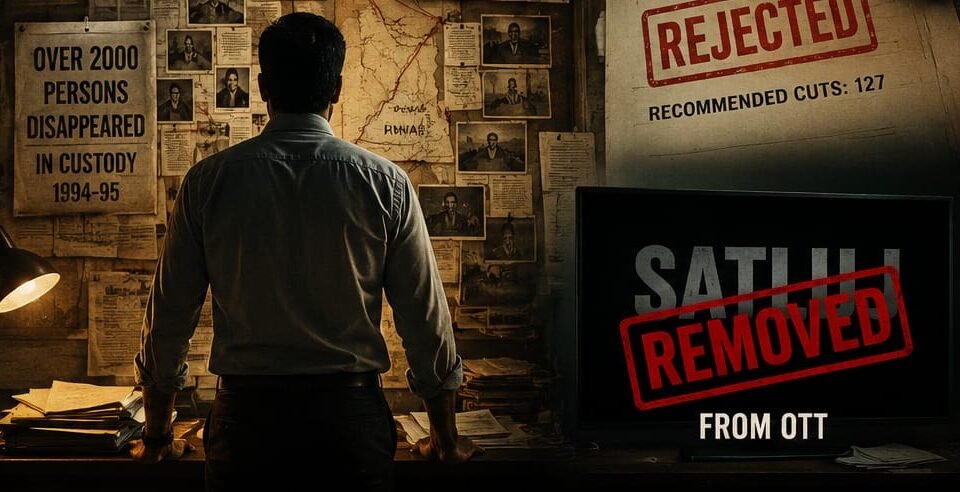

The newly released film Satluj has become the center of a major controversy, raising questions about censorship, freedom of expression, and the portrayal of sensitive historical events. The film has reportedly faced multiple hurdles, including a title change, extensive censor board objections, and removal from certain digital platforms, fueling public curiosity about its content.
Set in Punjab during the mid-1990s, Satluj explores a turbulent period that followed the insurgency era. According to the film’s storyline, the narrative revolves around a banker who begins investigating the mysterious disappearances of thousands of individuals allegedly taken into custody during a time when security forces and police were granted extraordinary powers to combat militancy.
As the investigation unfolds, the protagonist uncovers disturbing allegations and hidden truths, eventually finding himself caught in the same system he sought to expose. The film presents a dark and emotional account of justice, accountability, and the consequences of unchecked power.
Supporters of the film argue that it addresses an important chapter of history that deserves discussion and reflection. They believe cinema should have the freedom to examine difficult subjects, particularly those involving human rights and state authority. Critics of restrictions placed on the film question whether extensive censorship and release obstacles undermine artistic freedom.
On the other hand, opponents argue that films dealing with politically sensitive issues must be handled carefully to avoid misinformation, social tensions, or the presentation of contested historical narratives as established facts.
The controversy surrounding Satluj has intensified due to reports that the film’s title was changed more than once and that a large number of cuts were requested during the certification process. These developments have only increased public interest, with many viewers eager to understand why the film has faced such scrutiny.
Whether one views Satluj as a necessary examination of history or a controversial political statement, its journey highlights the ongoing debate over censorship, storytelling, and the role of cinema in confronting uncomfortable questions. The film’s fate may ultimately become as significant as the story it seeks to tell.