

One of the most controversial talking points of the 2026 FIFA World Cup has not been a goal, a penalty, or even a VAR decision. Instead, it revolves around a little-known disciplinary rule that has left many fans confused.
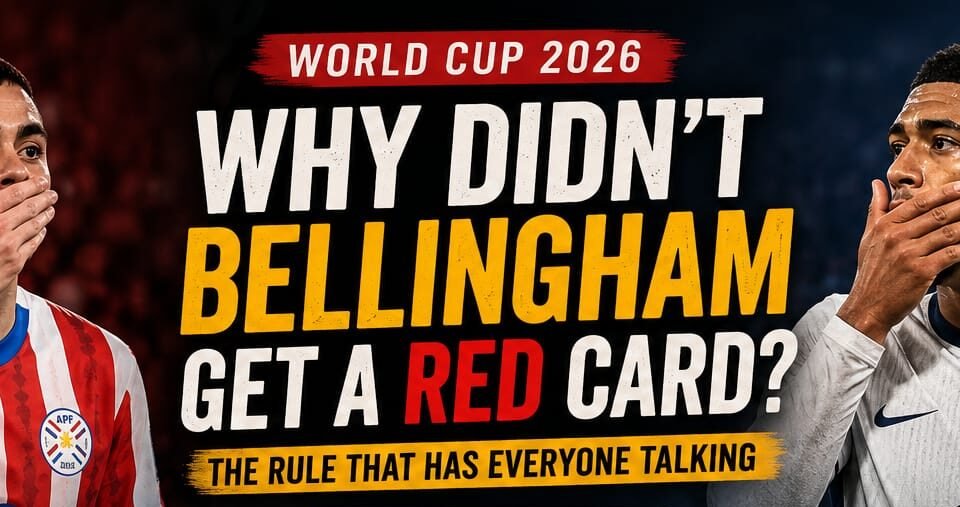
The debate began during the Turkey vs Paraguay match when Paraguay star Miguel Almirón was shown a straight red card after covering his face with his hand during a confrontation. The decision immediately sparked outrage on social media, with many supporters questioning the severity of the punishment.
However, the controversy grew even bigger when England’s Jude Bellingham appeared to make a similar gesture during the England vs Ghana encounter but escaped without a red card. Fans quickly accused officials of inconsistency, with some suggesting that bigger teams or star players receive more favorable treatment.
In reality, the difference lies in the interpretation of the rule rather than the gesture itself. According to the tournament’s disciplinary guidelines, covering the face is not automatically a sending-off offense. Referees are instructed to consider the context of the action.
If the gesture occurs during a confrontation, protest, or act of dissent toward officials or opponents, it can be deemed unsporting behavior and punished with a red card. In Bellingham’s case, officials apparently determined that the surrounding circumstances did not meet that threshold.
While the explanation may satisfy some observers, many fans remain unconvinced. The contrasting outcomes have highlighted how subjective certain disciplinary decisions can be and have fueled ongoing discussions about consistency in officiating.
As the World Cup progresses, this rule is likely to remain under the spotlight. Whether fans agree with the decisions or not, the Almirón and Bellingham incidents have ensured that one of football’s newest regulations is now among the tournament’s most debated topics.