

The Brexit referendum of 2016 was one of the most significant political events in modern British history. While it formally changed the United Kingdom’s relationship with the European Union, its effects reached far beyond foreign policy and trade. Brexit transformed domestic politics, exposing weaknesses in Britain’s political institutions, deepening social divisions, and creating a period of prolonged political instability.
Nearly a decade after the referendum, the United Kingdom continues to deal with the political consequences of leaving the European Union. Leadership changes, party fragmentation, economic pressures, and constitutional debates have become defining features of British politics.
Leadership Instability
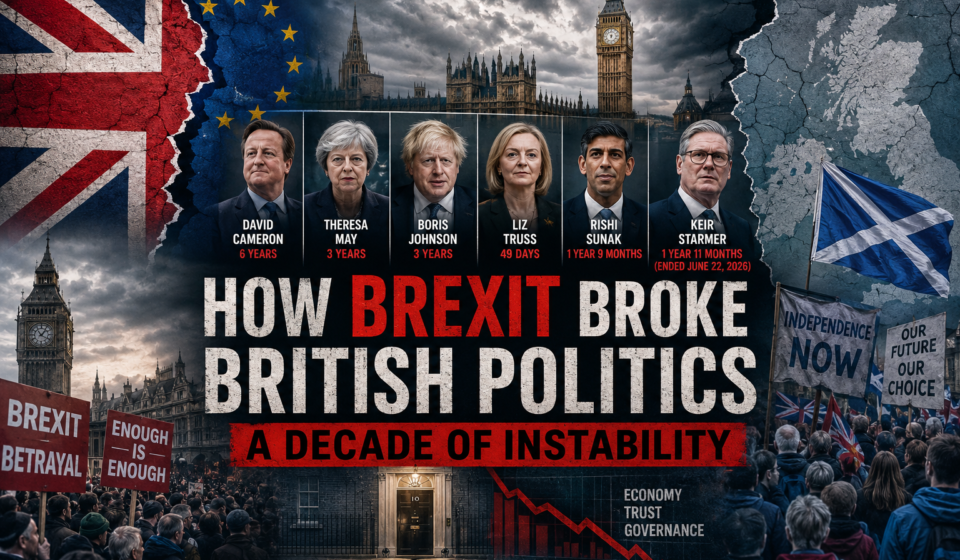
One of the clearest consequences of Brexit has been the rapid turnover of political leadership. Since the referendum, the UK has witnessed several Prime Ministers attempting to navigate the political and economic consequences of leaving the European Union.
Each government inherited different Brexit-related challenges, including trade negotiations, economic adjustment, and growing public dissatisfaction. While some leaders secured strong electoral mandates, maintaining long-term political stability proved far more difficult.
Frequent leadership changes have made it difficult for governments to develop consistent long-term policies. Instead, many administrations have spent considerable time responding to political crises rather than implementing structural reforms.
Fragmented Political Landscape
Brexit also transformed Britain’s traditional two-party political system.
The referendum divided voters across political, regional, and generational lines. While the Conservative and Labour parties remain Britain’s dominant political forces, smaller parties have gained greater influence in shaping political debate.
The rise of Reform UK has increased pressure on the Conservative Party, particularly on immigration and sovereignty. Meanwhile, the Liberal Democrats, Green Party, and nationalist parties have attracted voters seeking alternatives to the two major parties.
Political competition is no longer defined solely by left-versus-right ideology. Questions surrounding Brexit, immigration, national identity, and constitutional reform continue to shape electoral politics across the country.
Economic Pressures Continue
Although multiple global events have affected the British economy in recent years, Brexit has introduced long-term structural challenges.
Businesses have had to adjust to new trading arrangements with European markets, while labour shortages have affected several industries, including agriculture, healthcare, logistics, and hospitality.
Investment uncertainty, slower economic growth, and increased administrative costs have also become recurring concerns for businesses operating across the UK.
Successive governments have attempted to address these issues through new trade agreements and domestic reforms, but economic recovery has remained uneven.
Growing Constitutional Tensions
Brexit also intensified constitutional questions across the United Kingdom.
Scotland, where a majority voted to remain in the European Union, has continued debating the future of Scottish independence. The Scottish National Party has repeatedly argued that Brexit changed the constitutional relationship between Scotland and Westminster.
Northern Ireland has faced its own unique challenges. Post-Brexit trading arrangements and the Northern Ireland Protocol created political disagreements over trade, governance, and relations with Great Britain.
These developments have highlighted the growing importance of devolved governments and renewed debates about the future structure of the United Kingdom.
Public Trust Under Pressure
Years of political uncertainty have affected public confidence in Britain’s political institutions.
Many voters have become frustrated with repeated leadership contests, policy reversals, and political disagreements that often delayed decisions on long-term issues such as housing, healthcare, infrastructure, productivity, and economic growth.
Opinion polls have regularly shown declining trust in politicians and increasing support for political alternatives outside the traditional two-party system.
Looking Ahead
Nearly a decade after Brexit, the United Kingdom continues to search for political stability.
Future governments will face the challenge of balancing economic growth with public expectations while rebuilding trust in political institutions. They must also address constitutional tensions, improve public services, and develop long-term strategies that extend beyond short-term political survival.
Brexit fundamentally changed British politics. Its impact extends far beyond leaving the European Union. The referendum reshaped political competition, altered voter behaviour, and exposed structural weaknesses that continue to influence governance today.
Whether Britain can move beyond this period of instability will depend on the ability of future leaders to provide consistent leadership, restore public confidence, and address the long-term challenges facing the country.