
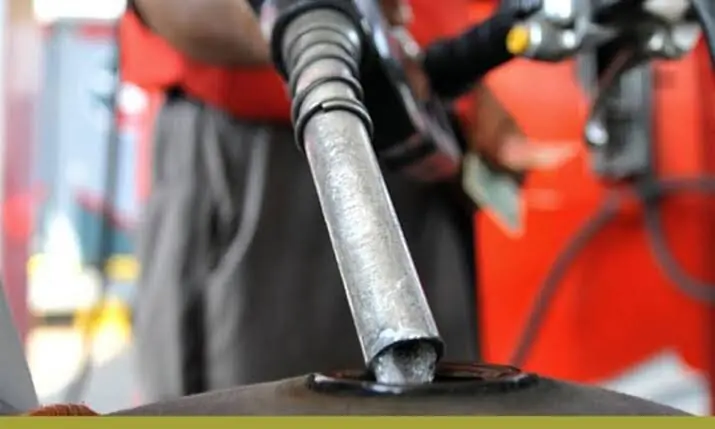

The Pakistani government has introduced a new pricing regime for petrol and high-speed diesel (HSD) effective from August 1 to August 3. The revised prices will retail at Rs336.03 per litre for petrol and Rs392.38 per litre for HSD, down from the previous rates of Rs336.01 per litre and Rs394.02 per litre respectively.
The Petroleum Division’s notification states that these new prices will be applicable during this period, with a total reduction of 12 paisas in petrol and 66 paisas in HSD compared to their current rates. The government continues to levy taxes and duties on both fuels at the rate of Rs110 per litre for petrol and Rs96 per litre for diesel.
The Oil and Gas Regulatory Authority (Ogra) has also announced a record increase in the price of regasified liquefied natural gas (RLNG), with prices now standing at $25.83 per mmBtu for SNGPL and $25.09 per mmBtu for SSGCL, up from their previous rates of $24.93 per mmBtu and $23.99 per mmBtu respectively.
This price hike is mainly due to a 15% increase in the RLNG rate fixed last month at $19.52 per mmBtu (Rs5,446 per mmBtu) for SNGPL and $18.63 per mmBtu for SSGCL. The increased prices will result in substantial increases in fuel costs for power generation, with a 148% increase compared to the previous rate.
The diesel price has also come down from its peak of Rs520.35 recorded on April 3. Its new price is now at Rs281 per litre after rising from Rs281 per litre following the US-Iran war broke out in February. The petrol price had peaked at Rs458.41 on April 3, and earlier this year it was at a record high of Rs266.
The government’s decision to fix fuel prices daily due to fluctuations in international market prices has been met with resistance from various stakeholders, including the All Pakistan Dealers Association (APDA), which plans to consider a protest plan for next week. The petrol price is mainly used by private transport and small vehicles, while changes affect the middle and lower-middle classes.
The diesel price impact will be felt across the public sector as well, particularly in heavy transport sectors such as power plants and large generators. Petrol and HSD are major revenue earners for both the government and private companies, with monthly sales of about 700,000 to 800,000 tonnes compared to just 10,000 tonnes of monthly demand for kerosene.
The new pricing regime is expected to have a significant impact on fuel costs for power generation in Pakistan. According to data from the Power Development Authority (PDA), the current price of RLNG-based power generation works out to Rs31 per unit, compared with Rs13.72 per unit in April this year. The diesel price has also come down significantly since its peak at Rs281 per litre.
The government’s decision to fix fuel prices daily is seen as a step towards addressing the ongoing fuel shortages and supply disruptions caused by the US-Iran war. However, it remains to be seen how effective this measure will be in reducing fuel costs for consumers.
Based on reporting from Dawn.