

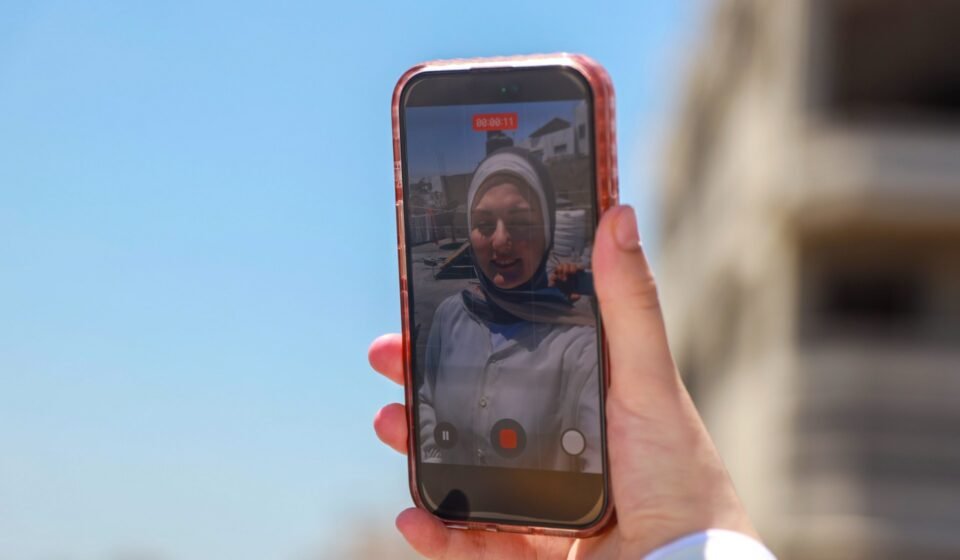

Gaza City – The small apartment that has weathered numerous Israeli airstrikes is now a testament to the resilience of its residents. At about 11 o’clock each night, Eman Lulu gets out of bed and begins her daily routine.
The living room, lit by only a handful of lights powered by solar panels installed by her father Hussam, 58, during the initial months of the war, is dimly illuminated. Beside the central battery on the balcony, where they charge all their devices, Eman unplugs her phone from the wall socket and places it beside her pillow.
The family’s rules for using technology have been strict since childhood. Beirut, 43, lays down the law by saying no to personal phones before finishing secondary school or turning 18. The arrangement was not born of blind obedience but rather a desire to protect Eman from potential dangers associated with social media and online interactions.
In Gaza, where only a handful of teenagers aged below 16 own smartphones, owning one is considered a matter of luck rather than expectation. In Eman’s class, only a few girls had phones of their own, and most borrowed devices from parents or relatives before finishing school. The family rule was simple: no personal phone until she had finished school and turned 18.
However, the rules have changed dramatically since the start of the conflict in October 2023. With the constant bombardment and lack of access to basic necessities like electricity, many families are now forced to rely on their phones for survival. The family’s apartment has been destroyed multiple times during military operations, forcing them to flee repeatedly.
The phone became a lifeline for Beirut as she navigated the war-torn city. She would carry her old iPhone 11 Pro Max with her, using it to document the destruction and upload videos that would eventually reach millions. The device transformed not only into a tool but also into a symbol of hope and resilience.
For Eman, receiving her new phone was a milestone in an otherwise long wait. “I wanted one all my life,” she says. “It’s like I’d advise any mother whose kids are still young — even if they’re 18 or 16… you still need to keep an eye on things.”
The family’s rules have been put to the test, and it remains to be seen how long they will continue to hold sway in a world where technology has become increasingly intertwined with daily life. As Beirut reflects on her journey, she acknowledges that the phone has changed not only herself but also those around her.
“I wanted the world to see what was happening to us,” she says. “Small in stature, I sit beside my mother as we watch the news together.”
The family’s story is a testament to the human spirit and its ability to adapt in the face of adversity. As they navigate this new reality, one thing remains constant: their love for each other.
Source: Al Jazeera
Based on reporting from Al Jazeera.