

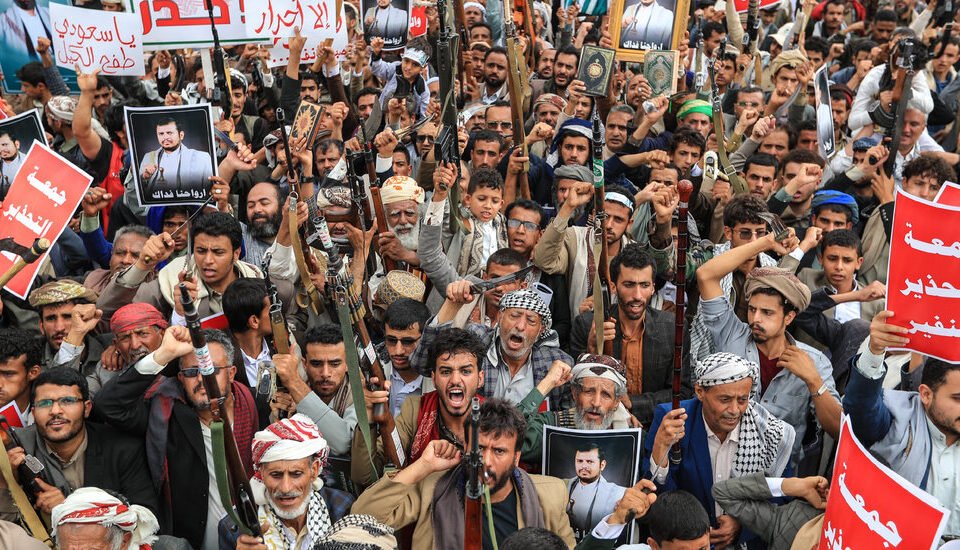

**What to Know About Iran and the Houthis**
In recent months, tensions have escalated between Iran and its backer, Washington, as well as Saudi Arabia. The Iranian-backed Houthi militant group has opened a new front in the conflict by announcing a blockade on Saudi shipping in a strategic waterway and attacking vessels.
The move is seen as a significant escalation of the ongoing U.S.-Iran war, which began months ago when Iran’s ballistic missile tests sparked tensions with Washington. The Houthis claim to have launched missile and drone strikes on oil tankers in the Red Sea after they declared a naval blockade on shipping linked to Saudi Arabia.
A Saudi military coalition has responded by launching airstrikes in Yemen, targeting Houthi positions and infrastructure. The Houthis say that they have fired missiles and drones at the kingdom, but so far, there are no reports of casualties or damage.
The Houthis’ decision to escalate their involvement is seen as a response to growing tensions between Iran and Saudi Arabia over issues such as oil production, trade, and regional security. Analysts believe that the Houthi’s actions will have significant implications for the region, particularly given their close relationship with Tehran.
**Background**
The conflict in Yemen began in 2014 when the internationally recognized government of President Abdrabbuh Mansur Hadi was ousted by the Houthis, who seized control of the capital city of Sanaa. The following year, a Saudi-led coalition launched a bombing campaign to oust the militants, but those efforts failed, leaving the Houthis in power.
The conflict has resulted in hundreds of thousands of deaths and widespread destruction, with millions displaced from their homes. The United Nations estimates that over 14 million people require humanitarian assistance due to the ongoing crisis.
**Who are the Houthis?**
The Houthi militant group is a Shiite Islamist organization based in northern Yemen. They have been fighting against the internationally recognized government of President Abdrabbuh Mansur Hadi for about two decades, and their actions have resulted in significant human suffering and economic hardship.
The Houthis oppose Israel and the United States, as well as Saudi Arabia, which they see as a key supporter of Israeli interests. The group is also part of a broader network of Iran-backed forces across the Middle East, including Hamas in Gaza, Hezbollah in Lebanon, and armed militia in Iraq.
**Relationship with Iran**
The Houthis’ relationship with Tehran has been complex over the years. While they have long portrayed themselves as key members of what Iran calls “the axis of resistance,” analysts believe that their actions are driven more by local motivations than a desire to support Iranian interests abroad.
In recent months, however, there have been reports of increased Houthi involvement in regional conflicts, including clashes with Saudi and Yemeni forces. The Houthis’ decision to escalate their involvement is seen as a response to growing tensions between Iran and Saudi Arabia over issues such as oil production, trade, and regional security.
**Consequences**
The escalation of the conflict has significant implications for the region, particularly given the Houthi’s close relationship with Tehran. Analysts warn that the situation could become more volatile in the coming weeks or months, potentially leading to further violence and humanitarian suffering.
As tensions escalate between Iran and Saudi Arabia, it remains to be seen how the international community will respond. The United States has been critical of Iranian support for Houthi actions, while Saudi Arabia has accused Tehran of backing the Houthis’ attacks on its territory.
**Sources**
* New York Times
* BBC News
* Al Jazeera
Based on reporting from New York Times.
Read original source