

Iran’s Surprise Missile Strike: A Contained Confrontation May Suit Its Interests Better Than Peace
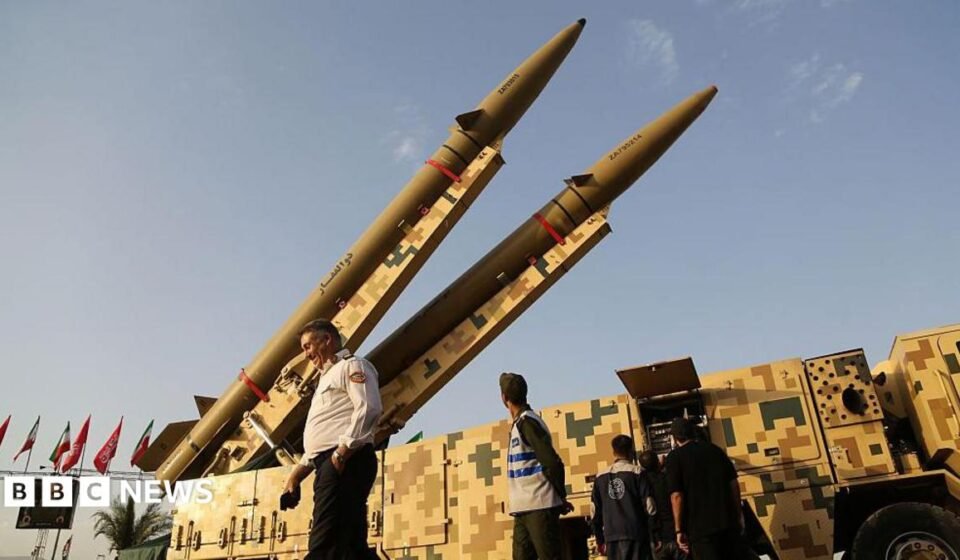
In a surprise move, Iran launched a missile strike on a US base in Jordan earlier this week, effectively ending the fragile pause in direct US-Iran fighting. The attack was unusual and has prompted Washington to resume strikes inside Iran. While it is difficult for Iranian leaders to explain why they chose this path, one possible explanation is that Tehran believes a controlled confrontation could offer greater strategic leverage.
The decision not to pursue an all-out war may be driven by the risks associated with such a conflict. The US military presence in the region has been a major obstacle to Iran’s goals of gaining control over the Strait of Hormuz and disrupting global shipping lanes. With sanctions still in place, Washington’s naval blockade of Iranian ports would continue, further limiting Tehran’s ability to achieve its objectives.
Iran may also be trying to avoid an all-out war due to concerns about rebuilding losses and maintaining economic stability. The country has been weakened by repeated military strikes and economic uncertainty, making it increasingly difficult to rebuild infrastructure and restore the economy. A prolonged ceasefire under current conditions would likely leave Iran in a weaker position, with sanctions remaining and international energy markets still affected.
In this scenario, Tehran may believe that a strategy based on sustained pressure is more effective than an all-out war. By limiting the conflict to a controlled confrontation, Iranian leaders can maintain the pressure on US interests without triggering a wider regional conflict or escalating tensions beyond their control.
The ongoing diplomatic efforts by Iran aim to reshape the international discussion around its demands in the region. Rather than accepting unrestricted freedom of navigation, Tehran has repeatedly signalled that shipping should operate under rules agreed with or administered by Iran. This approach may be seen as an attempt to maintain influence and shape the narrative on global energy markets.
From a domestic perspective, Iran continues to face high inflation rates, unemployment, economic hardship, and public dissatisfaction. During periods of external conflict, governments often find it easier to suppress internal opposition, justify tighter security measures, and rally support around national defence. This may reduce immediate political pressure created by economic problems but does not eliminate them.
The strategy employed by Iran is complex and carries significant costs. The country continues to absorb repeated military strikes, economic uncertainty, and the risk of a wider conflict that could further destabilize regional dynamics. However, Tehran believes it can maintain calibrated actions without triggering a response that fundamentally changes the political and military calculations of the United States.
The next unexpected strike by Iran could determine which path the conflict takes. The international community may become more willing to support efforts to increase pressure on Iran if the costs of bearing such an effort outweigh any potential benefits. Ultimately, the outcome will depend on Tehran’s ability to maintain controlled actions without triggering a response that fundamentally changes the political and military calculations of the United States.
Source: BBC World
Based on reporting from BBC World.