
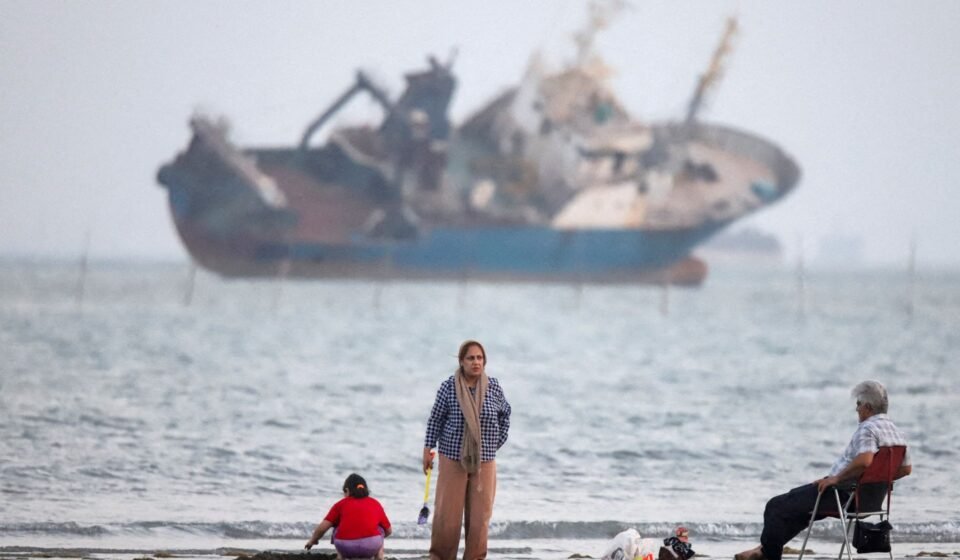

The United States Secretary of State’s latest remarks on the Strait of Hormuz have sparked a heated debate over the future of global energy transit. Marco Rubio has proposed a permanent shift outside the strait, citing Iran as an active threat and necessitating a massive realignment of how energy commodities flow to markets across the world.
According to data from the US Energy Information Administration (EIA), the narrow 39-kilometer strait handles roughly 20 million barrels of oil per day, equating to about 20 percent of global petroleum liquids consumption. The EIA also notes that the strait serves as the transit point for a fifth of the world’s liquefied natural gas (LNG) trade, primarily from Qatar.
Economic researcher Ahmed Abu Qamar has warned that Rubio’s statements represent a long-term strategic vision rather than an immediately executable economic plan. Energy markets are governed by the hard realities of supply and demand, he added, and it would take decades and billions of dollars in investments to even partially reduce reliance on the strait as one of the world’s main thoroughfares for commodities.
The most critical challenge lies in natural gas, Abu Qamar said, as the entire LNG export ecosystem – including liquefaction plants, specialised tankers, and receiving ports – is heavily reliant on Hormuz. He warned that if this route is blocked, Europe and Asia would be forced to engage in fierce competition for alternative gas supplies, inevitably triggering massive price spikes, global inflation, and deep confusion for central banks worldwide.
The pipeline illusion and the Red Sea trap
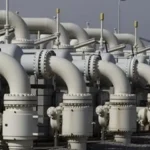
To execute this monumental shift, energy producers in the Middle East have previously mooted the idea of building vast overland pipelines to bypass the Strait of Hormuz. The crown jewel of this strategy is Saudi Arabia’s East-West Pipeline, also known as Petroline, which links the Abqaiq oil processing facilities to the port of Yanbu on the Red Sea.
Following recent repairs after wartime attacks, the Saudi Ministry of Energy confirmed that the pipeline is back to pumping approximately seven million barrels per day. Additionally, the United Arab Emirates operates the Abu Dhabi Crude Oil Pipeline, which transports up to 1.8 million barrels per day directly to the port of Fujairah on the Gulf of Oman.
However, completely replacing the Strait of Hormuz as a major corridor for energy resources from producer to consumer is mathematically impossible in the near term. An Al Jazeera explainer reported that existing alternative pipelines have a combined maximum capacity of only about nine million barrels per day, falling drastically short of the 20 million barrels that typically transit the strait.
The EIA estimated that as a result of any sudden disruptions in the Strait of Hormuz, there would be just around 2.6 million barrels per day of unused capacity from Saudi and Emirati pipelines. Abu Qamar further questioned the viability of this route for other major producers, asking how Kuwait, Qatar, and Iraq would export their massive energy outputs without the strait.
Shifting reliance from Hormuz to the Red Sea also transfers the geopolitical vulnerability to other regional chokepoints. Saudi Arabia’s successful East-West bypass relies on the Bab al-Mandeb Strait remaining open for ships travelling south to crucial Asian markets, such as China, Japan, and India.
The rerouting of oil to Yanbu simply forces Asian-bound tankers to navigate the Bab al-Mandeb, which is actively threatened by Houthi forces in Yemen. Static targets and investment fears
Bypassing maritime routes through overland infrastructure carries its own severe security risks. In an Al Jazeera report, independent energy analyst George Voloshin highlighted that pipelines and pumping stations are static, high-value targets. These facilities remain highly susceptible to drone and missile attacks, as seen in past disruptions.
Moving away from the sea simply transfers the risk to land. Abu Qamar pointed out that Iran is fully capable of targeting these overland pipelines and disrupting tanker traffic thousands of kilometres away. Because these massive infrastructure projects lack adequate protection against modern drone warfare, major global energy companies are deeply hesitant to invest billions of dollars into potentially highly vulnerable assets.
Ultimately, while partial diversification is under way, escaping the geographic reality of the Strait of Hormuz remains an elusive goal for the global energy market.
Based on reporting from Al Jazeera.